
Last updated November 23, 2026
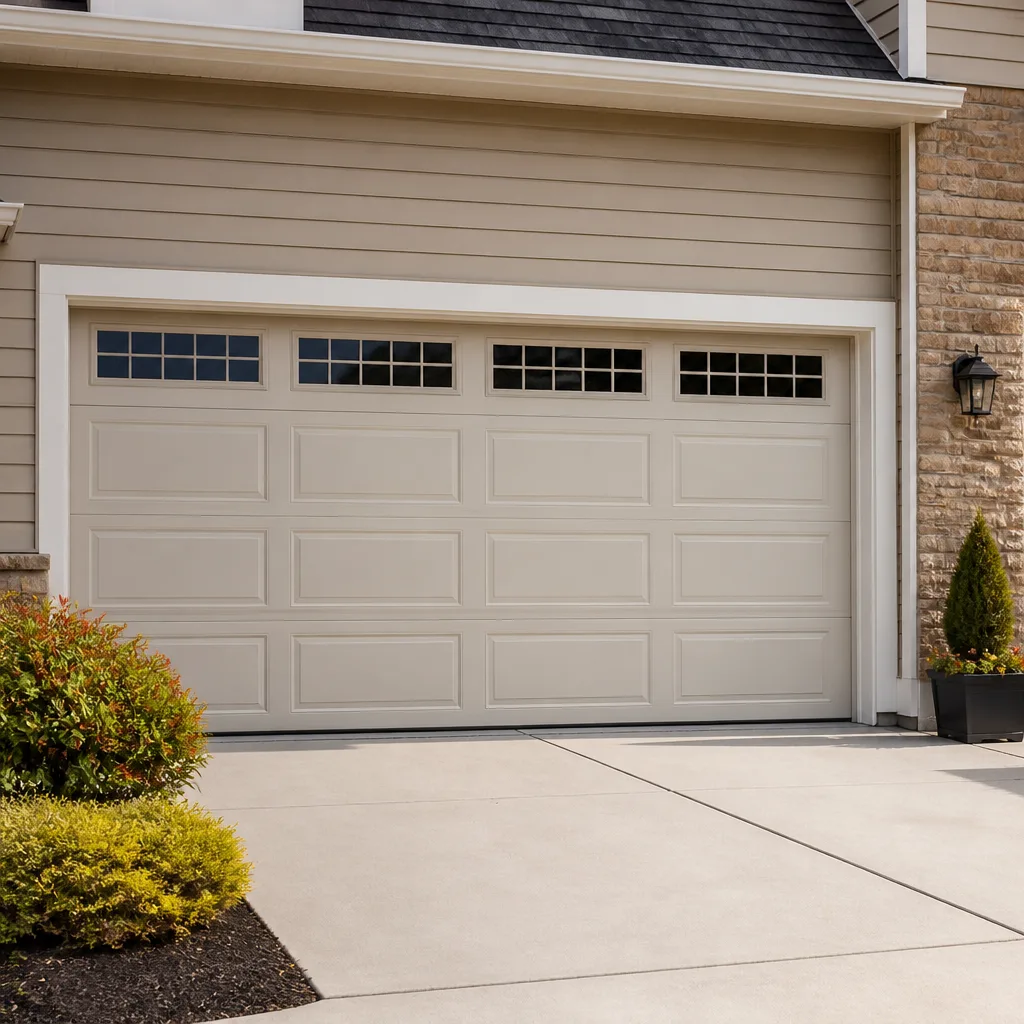 Raised-panel steel
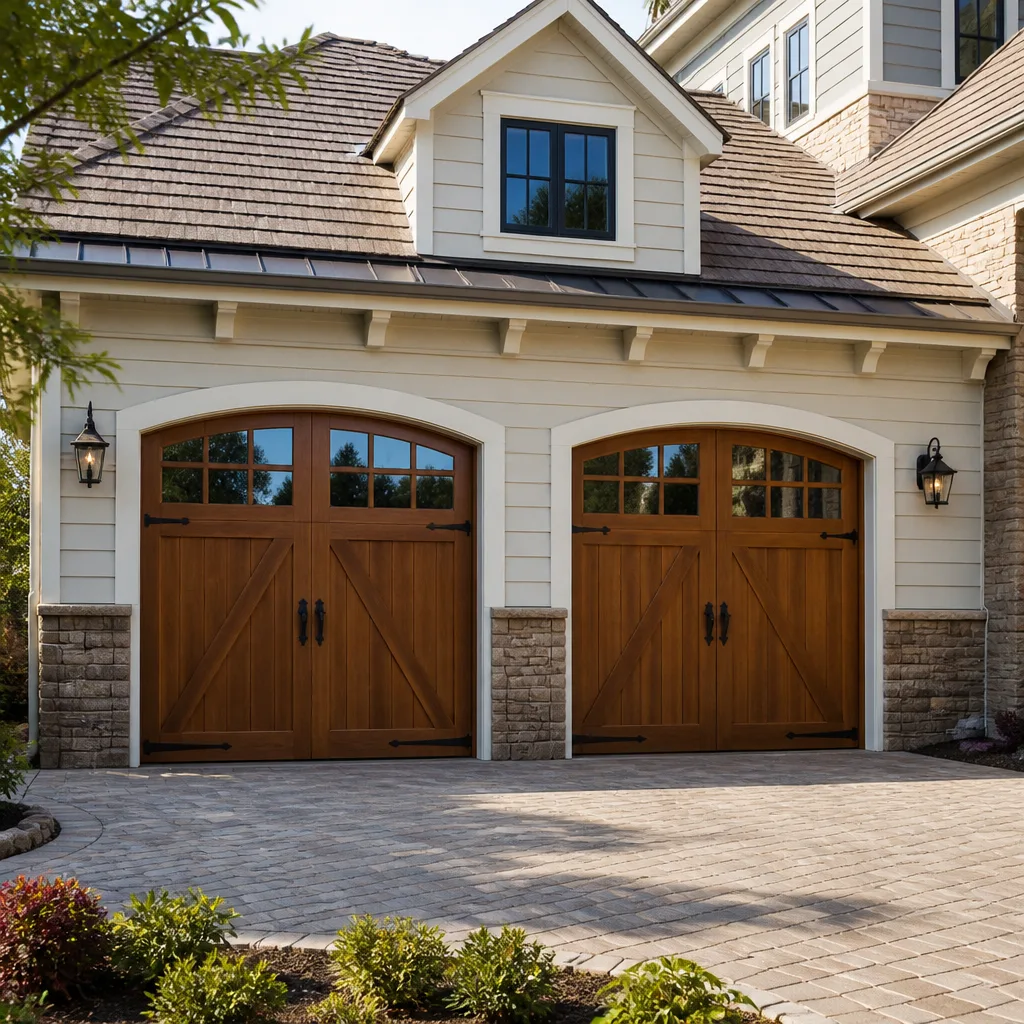 Carriage house
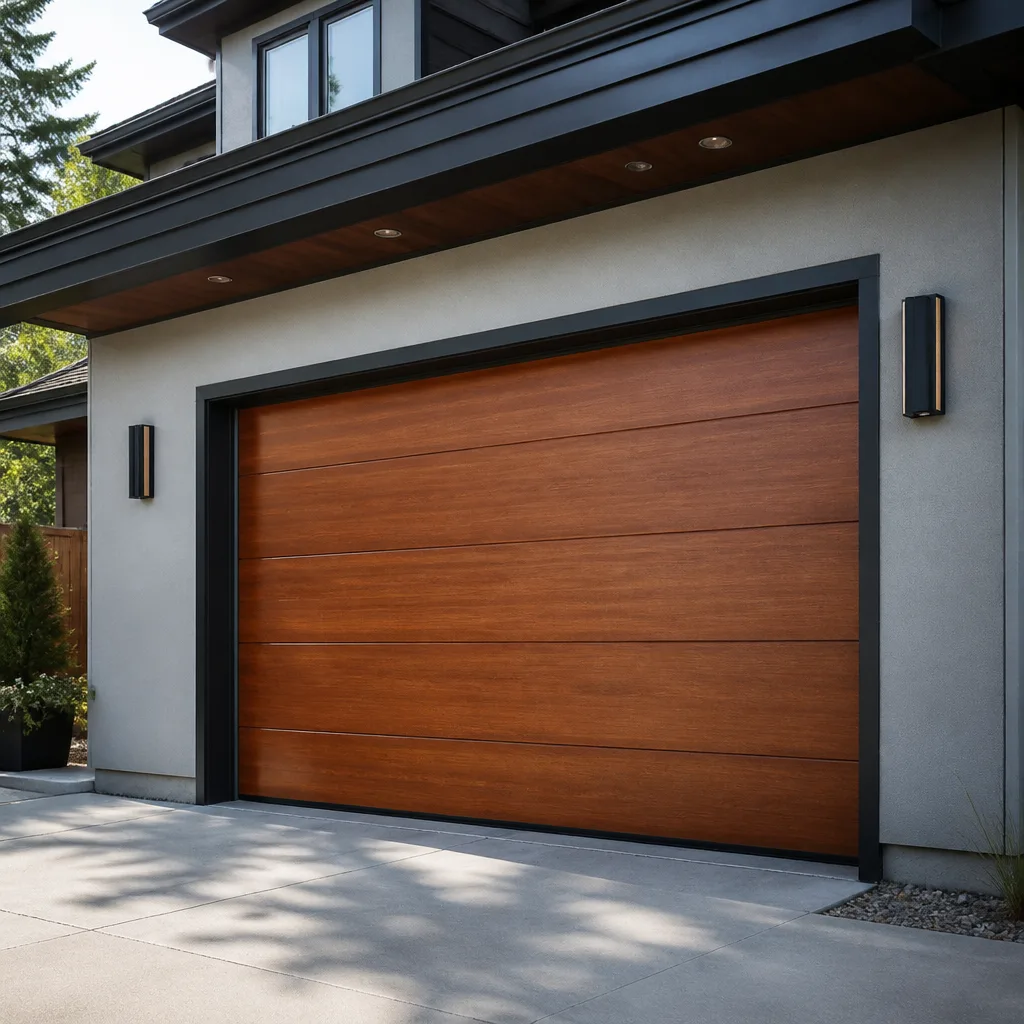 Modern flush
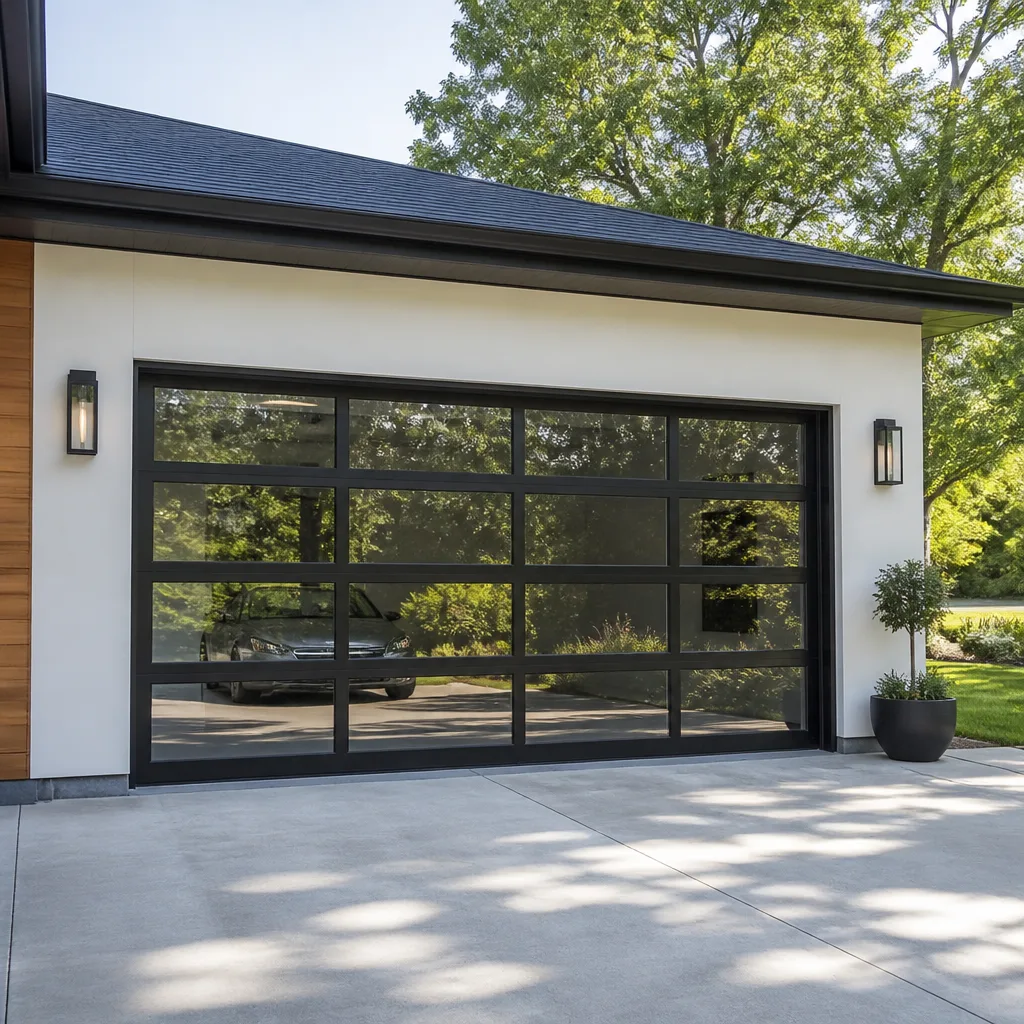 Full-view glass
 LiftMaster openers
 Chamberlain openers
Full 25-point door and opener safety check with every visit - springs, cables, rollers, tracks, and your LiftMaster or Chamberlain opener included
You get a price before we start. It does not change when the pro arrives.
Get your free estimateGarage Door Warning Signs: An Apopka Homeowner’s Reference Guide
A garage door doesn’t snap a spring without warning. It gives you weeks of signals first, and most homeowners miss them because those signals look different in Central Florida’s heat and humidity than they do in the photos on a manufacturer’s troubleshooting page. The rattle that sounds alarming in a YouTube video is often normal. The quiet hesitation you barely notice at 7am is often the real problem. In Apopka, where doors bake in the sun and swell in summer humidity, the early warning signs are subtle, cumulative, and easy to dismiss until a repair turns into an emergency. This guide covers what to actually listen for, what to look at, and when to stop touching the door and call someone.
Quick Answer
The most important garage door warning signs in Apopka are uneven or jerky travel, a door that sticks in summer and frees up in winter, grinding or popping that wasn’t there last month, rust streaks near the spring, frayed cables at the drum, and an opener that hesitates, reverses, or stops mid-travel. Any of these means the hardware is stressing before it fails. Catch them early and you’re looking at a repair; ignore them and you’re looking at a snapped spring, a dropped door, or a car trapped inside.
Styles & brands we work with
- Raised-panel steel
- Carriage house
- Modern flush
- Full-view glass
- LiftMaster openers
- Chamberlain openers
Table of Contents
- The Sound Profile: Torsion Spring Stress vs. Normal Noise
- Why Your Apopka Door Sticks in Summer and Frees Up in Winter
- Spotting Cable Fraying at the Drum Before It Fails
- What Orange Rust Streaks Near the Spring Actually Mean
- Opener Behavior That Signals Hardware, Not Sensors
- Visual Checks Every Apopka Homeowner Should Do Monthly
- How Long You Have: Reading the Progression
- Repair or Replace? Reading the Door’s Overall Condition
The Sound Profile: Torsion Spring Stress vs. Normal Noise
A torsion spring under load has a sound. When it’s healthy, you hear a low, even hum from the opener motor, a soft roll of the door along the track, and a settling thud when it reaches the floor. That’s the baseline. Anything outside that baseline is worth paying attention to, but the trick is knowing which sounds are cosmetic and which are the spring telling you it’s nearing the end of its cycle life.
Here’s how to sort them:
- Normal: A steady whir from the opener, a light metallic roll from the rollers, and a clean stop at the floor.
- Cosmetic: A squeak from a dry roller, a light rattle from a loose hinge bolt, a creak that appears once and doesn’t repeat. These respond to lubrication and tightening.
- Early warning: A rhythmic pop or click that repeats at the same point in the door’s travel. That’s usually a roller or hinge, but it can also be the first sign of a spring losing tension.
- Late warning: A grinding, growling, or snapping sound from the torsion bar, or a loud bang from the spring area. By the time you hear this, the spring is failing or has already failed, and the door should not be operated.
In Apopka, the sound profile shifts with the season. Doors that roll quietly in January get noisier in July, when heat expands the metal track and the rollers ride slightly differently. If a new sound appears in summer and disappears in winter, it’s often thermal, not mechanical. If a sound appears in summer and stays through winter, treat it as mechanical and have it looked at. Our technicians have up to 14 years of experience and hear the difference between these two patterns constantly.
Why Your Apopka Door Sticks in Summer and Frees Up in Winter
If your garage door drags, hesitates, or binds in the summer heat and then magically “fixes itself” when the weather cools, you’re not imagining it. You’re watching thermal expansion in action. Metal tracks, hinges, and door panels expand in Apopka’s summer heat and contract in the milder winter months. A track that’s set a hair too tight in January will bind in July. A door that clears the weather seal in winter will drag against it in summer. This cycle feels harmless because the door keeps working, but every summer it’s quietly damaging the track, the rollers, and the opener motor.
Why the cycle matters:
- The track flexes every season. Repeated expansion and contraction loosens the fasteners that hold the track to the jamb. Over a few summers, the track drifts out of plumb.
- Rollers wear unevenly. A roller that binds in summer and rolls free in winter wears on one side of its bearing, which shortens its life and adds noise.
- The opener works harder. Every summer, the motor pushes through resistance it shouldn’t feel. That stress shows up as opener hesitation, reversal, or premature motor wear.
- The weather seal takes a beating. A door that drags on the seal in summer thins it out, which lets in heat, humidity, and the occasional Central Florida afternoon downpour.
The fix isn’t to wait for winter. It’s to have the track checked for plumb and the rollers inspected for binding while the problem is active. If the door is dragging now, that’s the best time to diagnose it. It might be a track adjustment, a roller replacement, or a sign that the spring has lost some tension. A free estimate tells you which, without guesswork. When a track or roller problem is caught early, a quick garage door repair handles it before the seasonal cycle does real damage.
Spotting Cable Fraying at the Drum Before It Fails
Garage door cables are the least visible and most dangerous part of the system. They run from the bottom corners of the door, up the sides, and around a drum at the top of the torsion bar. When they fray, they fray at the drum first, on the side that takes the most load. In Apopka’s humidity, cables also pick up surface corrosion that can hide a broken strand until the cable snaps. A snapped cable can whip with enough force to damage a car or injure someone standing nearby, so this is one check to take seriously.
How to look without touching:
- Stand back and look up at the drum. The drum is the spool at each end of the torsion bar. Look for strands that have separated from the main bundle and are sticking out like a frayed rope end.
- Check the cable where it wraps the drum. A healthy cable wraps evenly. A failing one bunches, crosses over itself, or sits unevenly on the spool.
- Look at the bottom corners of the door. That’s where the cable attaches via a bracket. Rust, elongation, or a kink here is a warning sign.
- Listen for a metallic tick or snap. A cable under tension with a broken strand often makes a faint ticking sound as the door moves.
Do not touch, adjust, or attempt to re-seat a cable under tension. Cables and springs store enormous energy, and a slip can cause serious injury. If you see fraying, keep the door closed and call for service. In our experience, cable problems in Apopka usually show up on the sun-exposed side of the door first, because heat and UV accelerate wear on the cable sheath and the drum hardware. If a cable has already snapped, that’s an emergency call – a door hanging by one cable is unstable and shouldn’t be operated. The same principle applies on any brand, whether it’s an Amarr, a Wayne Dalton, a Craftsman, or a Raynor. The hardware is what fails, not the label.
What Orange Rust Streaks Near the Spring Actually Mean
If you see orange or reddish-brown streaks on the wall or the door jamb near the torsion spring, that’s rust bleeding off the spring’s coils or the torsion bar hardware. In Apopka’s humidity, rust on a garage door spring is not cosmetic. It’s the spring telling you its protective coating has failed and the steel underneath is corroding. Corrosion creates weak points, and a spring with weak points snaps under load. The rust streak is your warning that the clock is running.
What to look for:
- Streaking on the wall or jamb directly behind or beside the spring. This is the classic sign that the spring is corroding.
- Visible rust on the coils themselves, especially orange or flaky patches rather than a light surface film.
- Rust at the spring anchor plate or the torsion bar brackets, which can indicate broader hardware corrosion.
- Rust at the hinges and bottom brackets, which often accompanies spring corrosion in humid climates.
How much time you have depends on how far the corrosion has progressed. A light surface film might give you months. Flaking, pitting, or a spring that’s already making noise could fail within weeks. There’s no safe way to measure remaining spring life from the outside, so the practical answer is: don’t wait. A trained technician can inspect the spring, measure its tension, and tell you whether it’s serviceable or due for replacement. Spring repair is one of the highest-risk jobs in the trade and one of the most commonly botched DIY repairs, which is why it’s a dedicated service for us rather than an add-on.
Opener Behavior That Signals Hardware, Not Sensors
Most homeowners blame the sensors when the door misbehaves. Often it’s not the sensors at all. The opener is responding to resistance from the door’s hardware, and its safety system is doing exactly what it should by reversing or stopping. Learning to read this pattern saves you from replacing a sensor that’s working fine while the real problem gets worse.
The pattern to watch for:
- Hesitation at the start. The opener pauses briefly before the door moves. That’s the motor straining against resistance from the track, rollers, or a weakening spring.
- Reversal partway up or down. The door moves a few feet, then reverses. If the sensors are aligned and the path is clear, this is the opener’s force limit tripping because the door is binding.
- Stopping mid-travel. The door stops without reversing. On a LiftMaster, Chamberlain, or Genie opener, this is often the travel limit or force setting reacting to a hardware change.
- Inconsistent travel points. The door stops at slightly different heights each time. That suggests the opener is compensating for varying resistance, which points back to the door.
- Remote or keypad lag. If the remote only works when you’re close, that’s a remote or receiver issue, not a hardware issue. Different symptom, different fix.
The test is simple: disconnect the opener (pull the manual release with the door closed) and try to lift the door by hand. If it’s heavy, binds, or won’t stay up, the problem is the door, not the opener. If it moves smoothly and stays up, the opener itself needs attention. If you can’t safely lift it, don’t force it. That test alone tells a technician a lot before they arrive, and it’s the first thing we check on a garage door opener repair call.
Visual Checks Every Apopka Homeowner Should Do Monthly
A five-minute monthly walk-around catches most of the problems in this guide before they become expensive. These checks are safe to do from the ground with the door closed. They don’t require tools.
- Look at the spring. Check for rust, streaks on the wall, and visible gaps or coils that look stretched or compressed unevenly.
- Look up at the drums and cables. Check for fraying, bunching, or cables that have jumped the drum.
- Look at the track. Check for dents, bends, or sections that look out of line with the rest of the track.
- Look at the rollers. Check for cracked nylon, flat spots, or rollers that have come out of the track.
- Look at the hinges and brackets. Check for rust, loose bolts, or metal that’s bent.
- Look at the weather seal at the floor. Check for gaps, tears, or a seal that’s been crushed flat.
- Listen while the door runs. Note any new sound and whether it repeats at the same point in travel.
Write down anything new and check it again in a week. A sound or visual change that repeats is a signal. A one-time noise that never comes back is usually nothing. This log is also useful when you call for service, because it tells the technician what’s changed and when.
How Long You Have: Reading the Progression
Garage door failures follow a fairly predictable progression. Knowing where you are on that progression helps you decide whether to schedule a service call or treat it as urgent.
- Stage 1 – Subtle. A new sound, a slight hesitation, a door that’s marginally slower. Spring is losing tension or a roller is wearing. Weeks to months of runway.
- Stage 2 – Noticeable. The door sticks seasonally, the opener reverses occasionally, rust is visible on the spring, or a cable shows early fraying. Days to weeks of runway before the risk climbs.
- Stage 3 – Active. Grinding, popping, a door that won’t stay up, visible cable damage, or a spring that’s clearly sagging. Days of runway. Call now.
- Stage 4 – Failed. The spring has snapped, the cable has broken, or the door is stuck. Stop operating the door. This is an emergency call.
In Apopka, the summer heat tends to accelerate the move from Stage 1 to Stage 2, and the humidity accelerates corrosion on the spring and hardware. A door that would take three months to move from Stage 2 to Stage 3 in a milder climate can move faster here. The earlier you catch it, the cheaper the fix is likely to be. A roller replacement is a small job. A snapped spring with a bent track and a strained opener is not.
Repair or Replace? Reading the Door’s Overall Condition
Not every warning sign means replacement, and not every door is worth repairing. The decision comes down to how many systems are failing and how old the door is. A single failing component on an otherwise sound door is a repair. Multiple failing systems on a door that’s already showing wear is where replacement starts to make sense. The goal isn’t to sell you a new door you don’t need; it’s to tell you honestly which one your situation calls for.
Signs repair is the right call:
- One component is failing (a spring, a roller set, a single cable), and the rest of the door and hardware are in good shape.
- The door panels are solid, the track is straight, and the opener is functioning.
- The failure is recent and the door has otherwise been reliable.
Signs replacement deserves a serious look:
- Multiple springs, cables, or rollers are failing at once, which suggests the whole system is at the end of its life.
- The door panels are dented, rotted, or separating, and the hardware can’t be trusted to hold new parts.
- The track is bent or out of plumb beyond what adjustment can fix.
- The opener is failing at the same time as the door hardware, and both are showing their age.
If replacement is on the table, a professional garage door installation is measured, ordered, and scheduled rather than done same-day, and we’ll give you a written price before anything is ordered. If repair is the right answer, we’ll say so. Our whole business is garage doors, so we don’t need to sell you a door to make a service call worth our time. Our technicians are trained across LiftMaster, Chamberlain, Genie, Clopay, Amarr, Wayne Dalton, Craftsman, and Raynor, which means we work on the brand you already have rather than steering you toward a replacement you didn’t ask for.
Common Mistakes to Avoid
- Blaming the sensors for every opener problem. If the sensors are aligned and the path is clear, the issue is almost always door hardware. Replacing sensors won’t fix a binding track.
- Ignoring a seasonal stick. A door that binds in summer and frees up in winter is damaging its track and opener every summer. It’s not fixing itself; it’s hiding the problem.
- Using WD-40 as a long-term lubricant on the track and springs. It’s a solvent, not a lubricant. It attracts dust and grime, which makes the problem worse over time.
- Painting over the spring or the torsion bar hardware. Paint hides rust and can interfere with the spring coating. It also makes the rust streak that warns you invisible.
- Trying to adjust a torsion spring or cable by hand. These components store dangerous energy. Spring and cable work is a trained-technician job, full stop.
- Waiting for the spring to snap before calling. A snapped spring is an emergency. A rusting or noisy spring is a scheduled repair. Catching it early is the difference.
- Letting a slow or hesitant opener run for months. The opener is straining against resistance. That shortens its life and hides the real problem.
See the difference
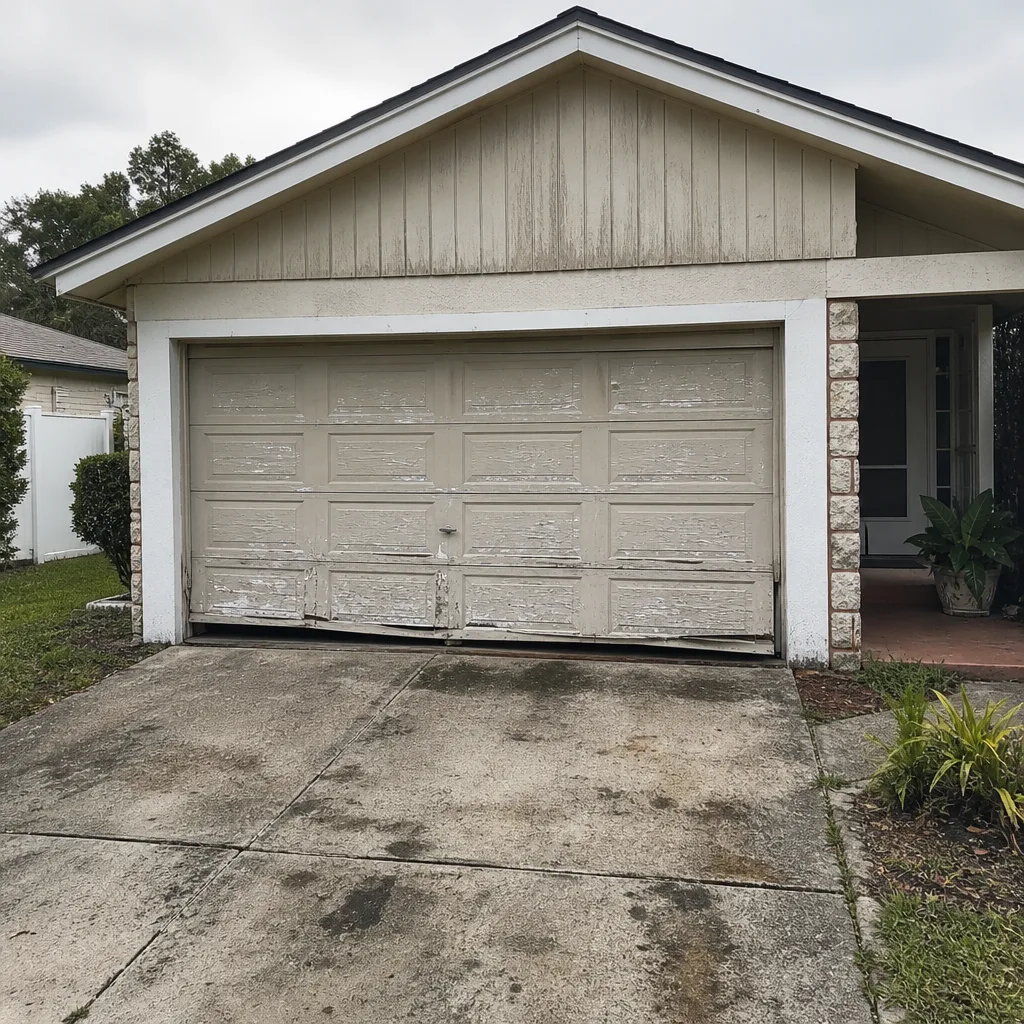 Before
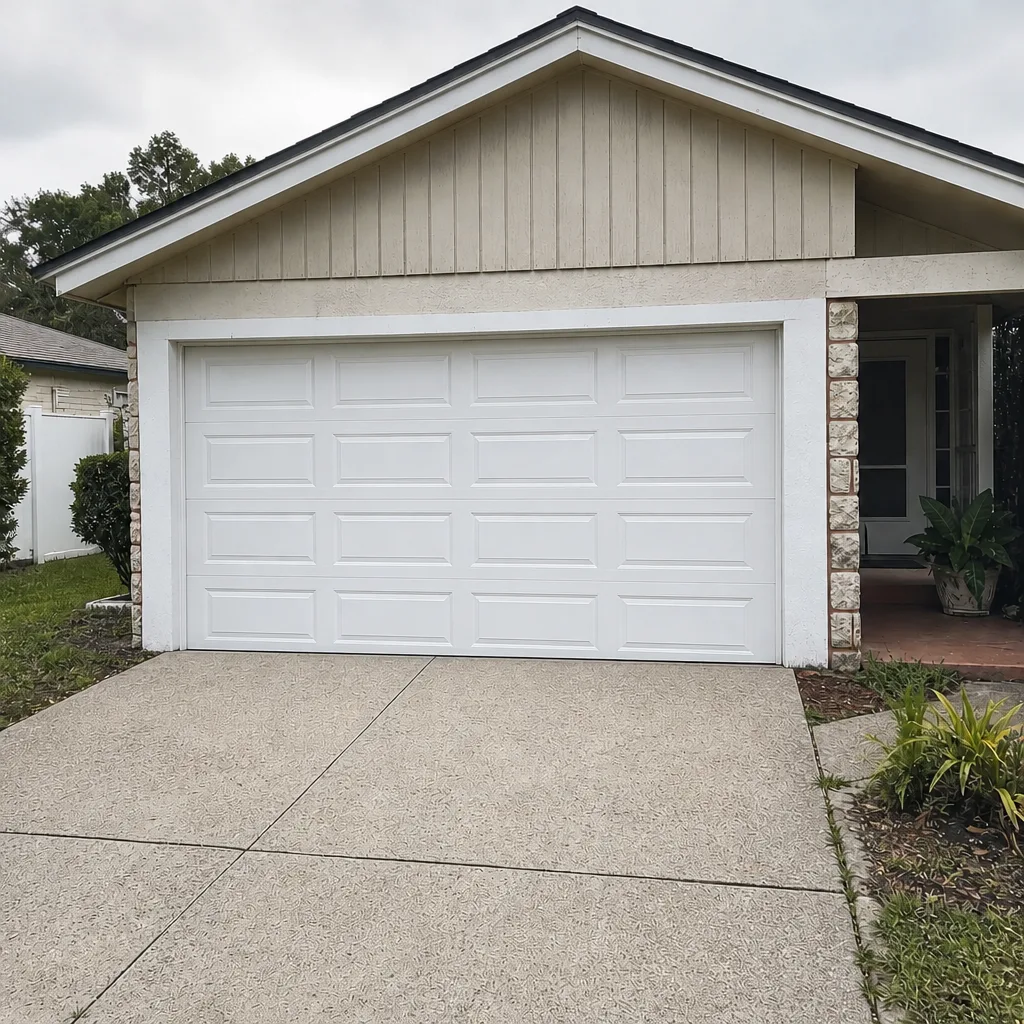 After
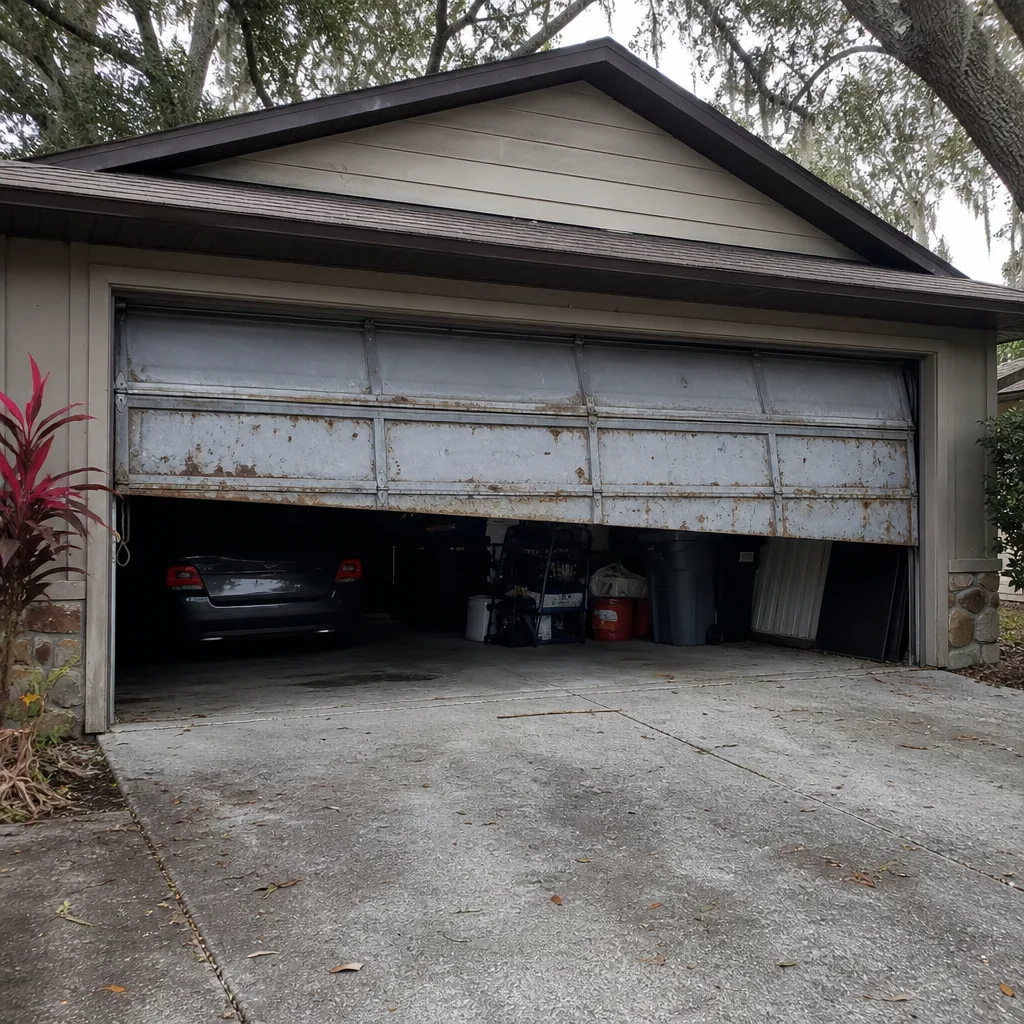 Before
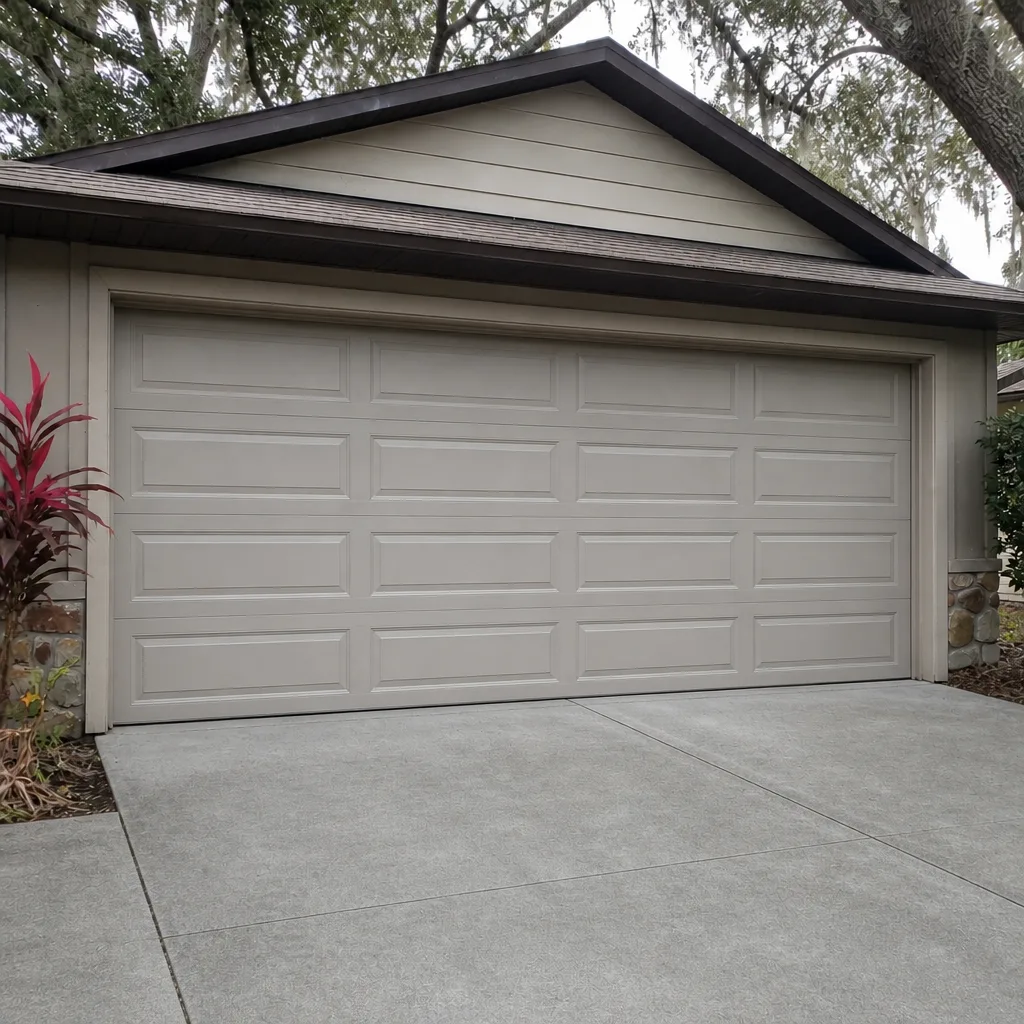 After
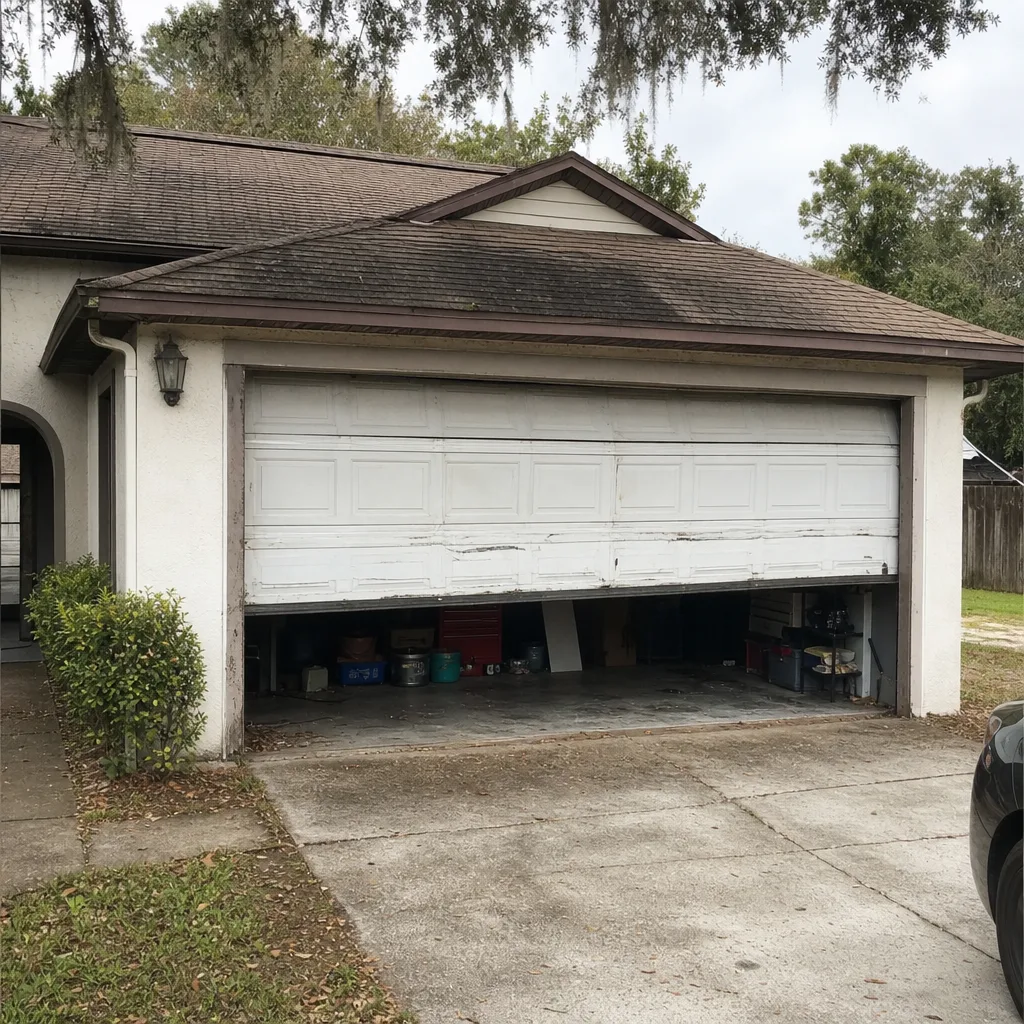 Before
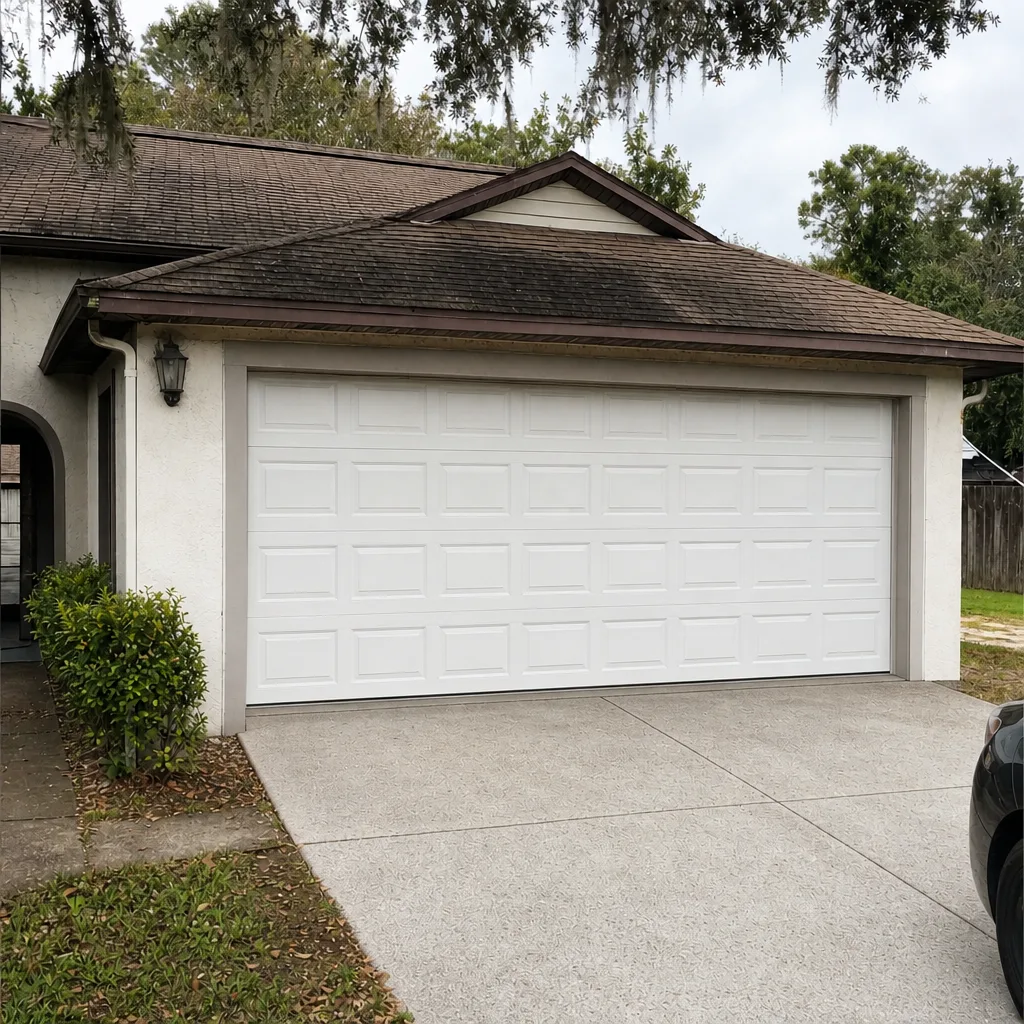 After
When to Call a Professional
Call a professional the moment you see fraying at the cable drum, rust streaks near the spring, a door that won’t stay up, or a spring that has snapped. These aren’t “wait and see” situations. Call when the opener reverses for no clear reason, when the door sticks in summer and stays stuck, or when a new sound repeats at the same point in travel. Call when the door is hanging unevenly, when a roller has come out of the track, or when you’re not sure whether the problem is the door or the opener.
Apopka Garage Door Repair Co offers free estimates in Apopka – call (844) 443-4734. We answer 24/7. Fast dispatch from 7am to 7pm, Sunday through Friday. The price is quoted and agreed before any work starts, and the written estimate sets the final price. No upsell, no guesswork, just a diagnosis and a fix.
Frequently Asked Questions
The first warning sign is usually a new sound or a slight hesitation in the door’s travel, not a visible break. Listen for a rhythmic pop, click, or grind that repeats at the same point in the door’s motion, and check the wall near the spring for rust streaks. Catching it at this stage is a scheduled repair; catching it after a snap is an emergency. Call (844) 443-4734 for a free estimate if you’re hearing something new.
The door is sticking because Apopka’s summer heat expands the metal track and door hardware, which can cause binding that disappears when temperatures drop. The cycle feels harmless, but it’s quietly wearing the track, rollers, and opener every summer. Have the track checked for plumb while the problem is active. Call (844) 443-4734 for a free estimate – estimates are free.
No. Torsion springs and cables store enough energy to cause serious injury, and spring and cable work is a trained-technician job. This is one of the highest-risk repairs in the trade and one of the most commonly botched DIY jobs. Keep the door closed and call a professional. Call (844) 443-4734 – we handle spring repair and cable work as a dedicated service.
If the sensors are aligned and the path is clear, the opener is almost certainly reacting to resistance from the door’s hardware, not a sensor fault. Disconnect the opener and try lifting the door by hand; if it’s heavy, binds, or won’t stay up, the door needs service. Call (844) 443-4734 for a garage door opener repair free estimate – estimates are free.
Yes. Central Florida’s humidity accelerates corrosion on springs, cables, hinges, and bottom brackets, and it makes rust streaks near the spring show up faster than they would in a drier climate. That’s why the monthly visual check matters here. If you see orange streaking, don’t wait. Call (844) 443-4734 for a free estimate.
Yes, if the door won’t close we offer same-day emergency service for urgent situations. We answer 24/7; a call outside dispatch hours is booked into the next opening, Sunday through Friday, 7am to 7pm. Fast dispatch from 7am to 7pm. Call (844) 443-4734 – estimates are free and the price is quoted and agreed before any work starts.
The Bottom Line
A garage door failure is almost never sudden. In Apopka, the warning signs come first: a seasonal stick, a new sound that repeats, rust streaks near the spring, fraying at the cable drum, an opener that hesitates or reverses. Learn to read them and you’ll catch most problems at the repair stage instead of the emergency stage. Monthly visual checks take five minutes. The sound profile matters more than any single noise. And when something changes and stays changed, that’s your signal to call. Apopka Garage Door Repair Co works on the brand you already have across the major garage door and opener brands. No upsell, no guesswork, just a diagnosis and a fix.
Call (844) 443-4734 for a free estimate. We answer 24/7. Fast dispatch from 7am to 7pm, Sunday through Friday. The price is quoted and agreed before any work starts, and the written estimate sets the final price.
Written by the team at Apopka Garage Door Repair Co.