
Last updated November 23, 2026
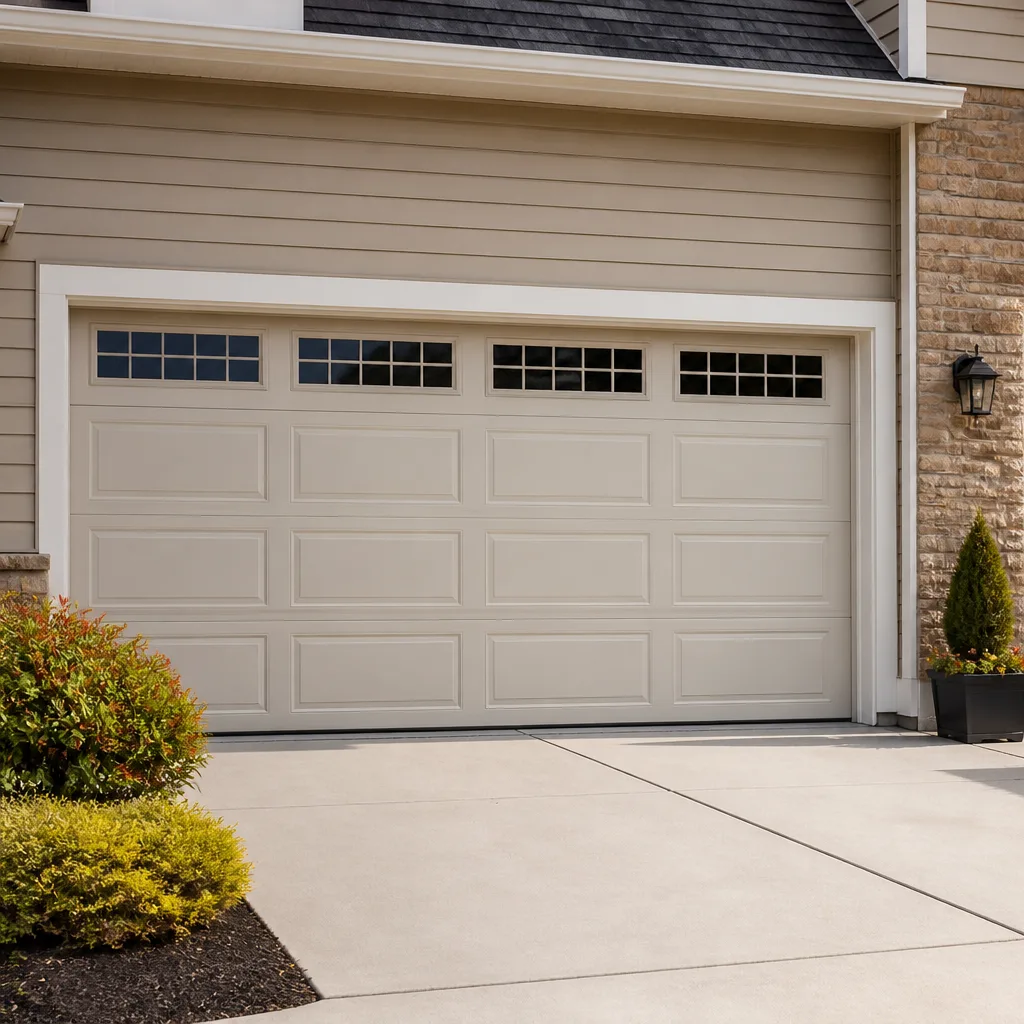 Raised-panel steel
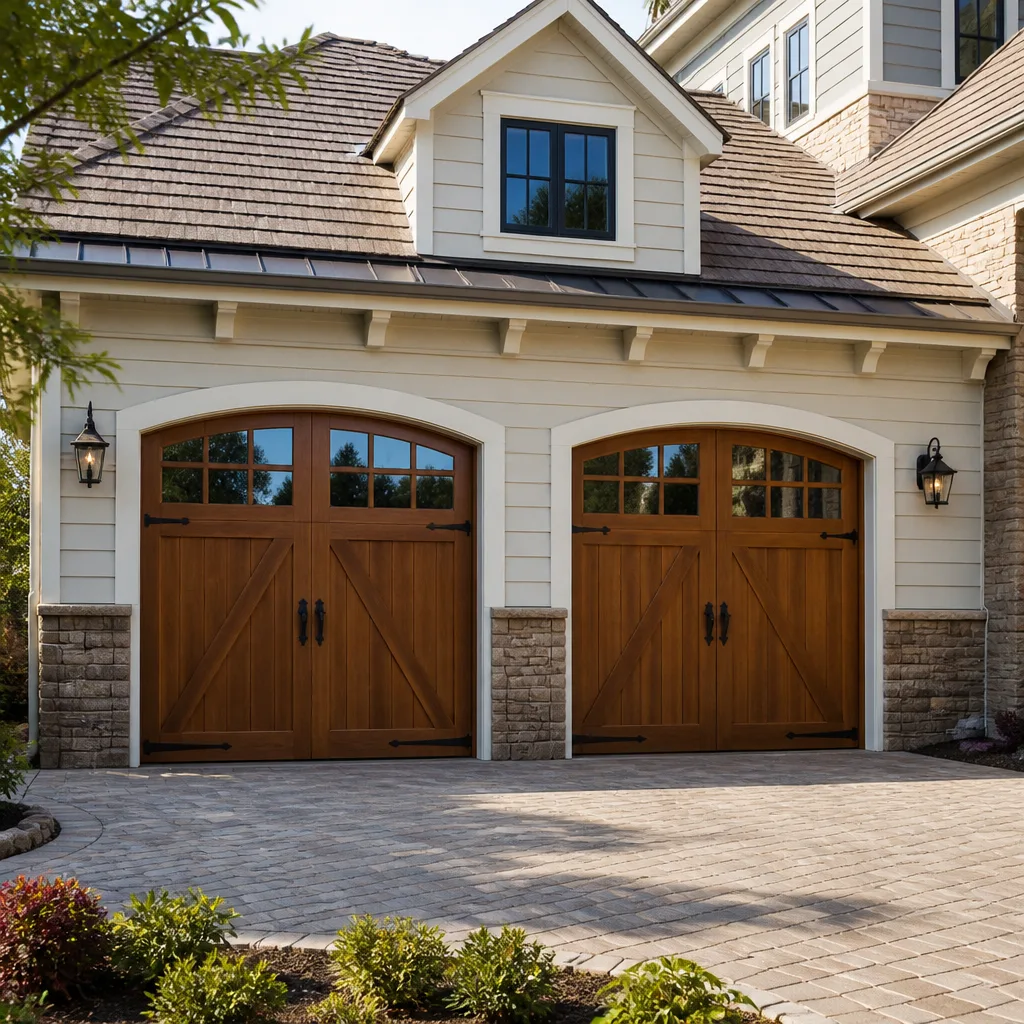 Carriage house
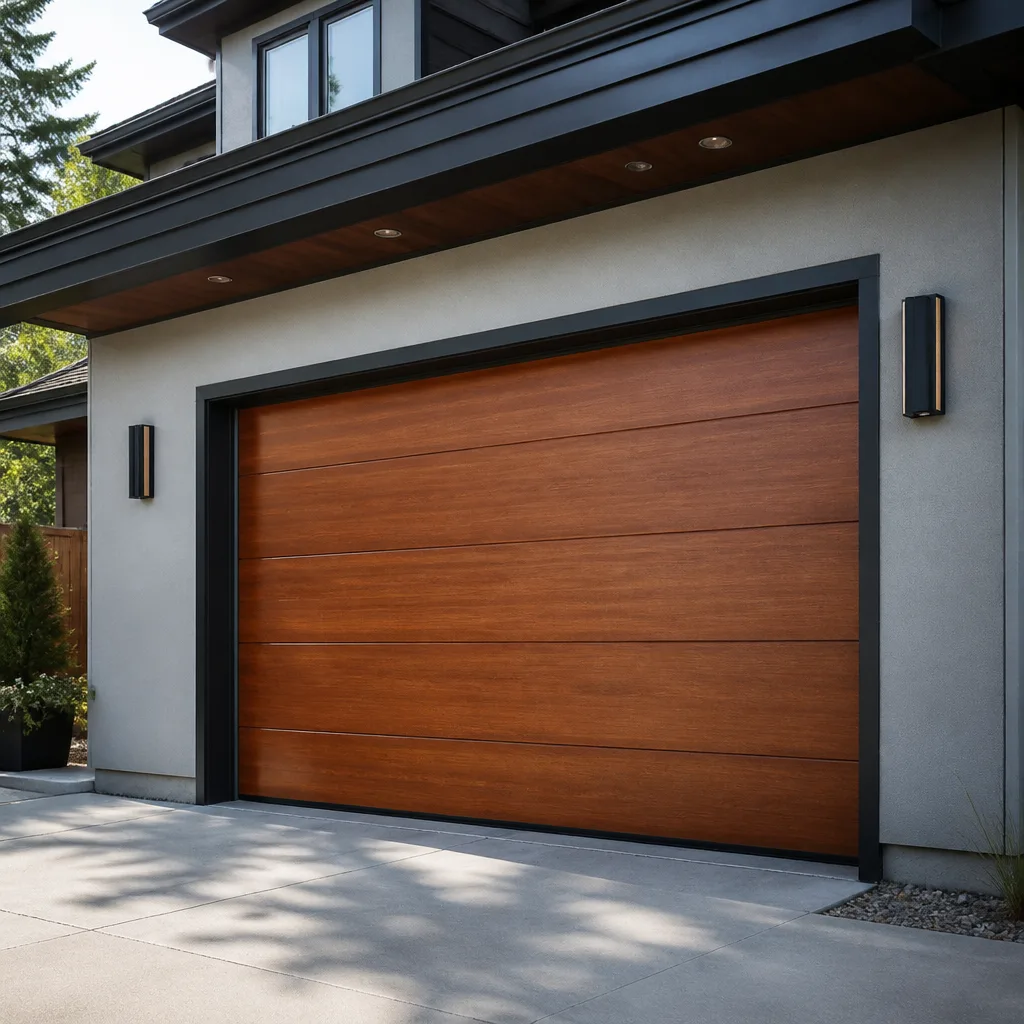 Modern flush
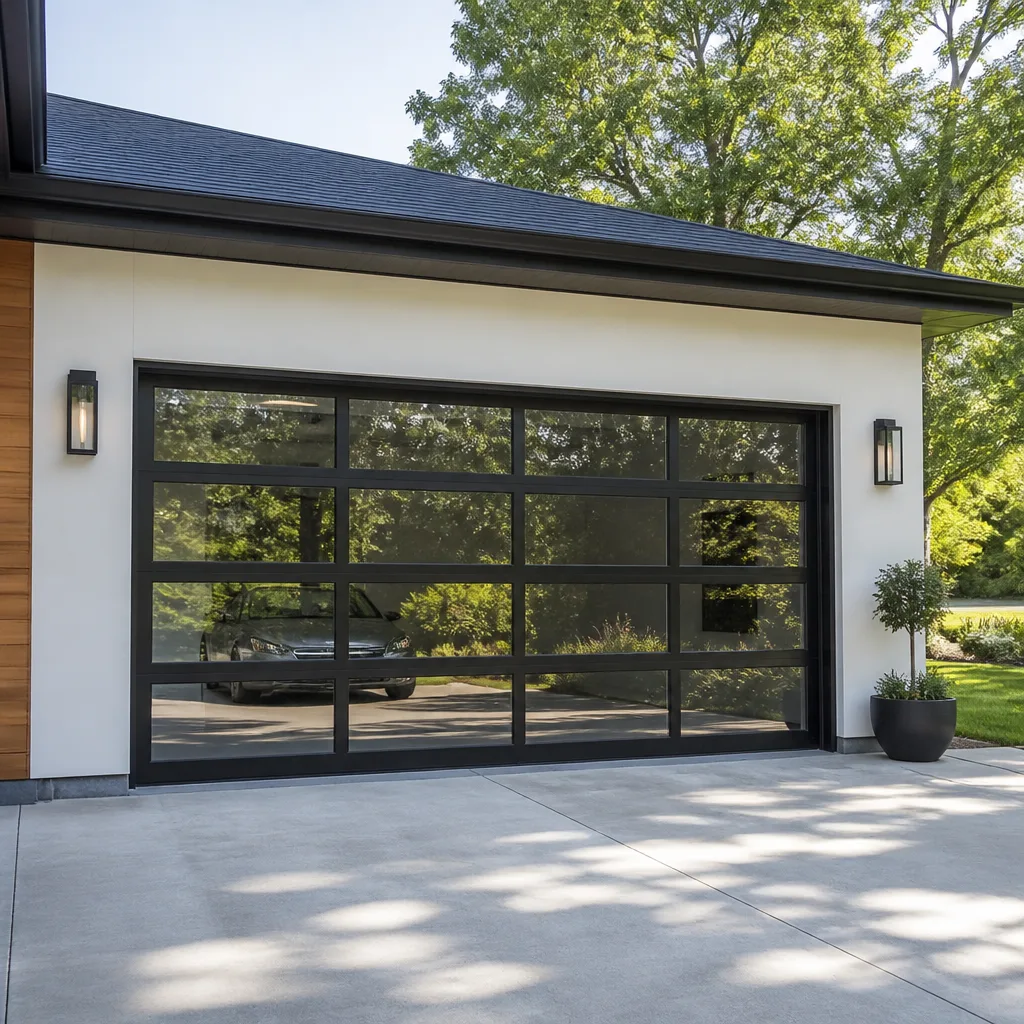 Full-view glass
 LiftMaster openers
 Chamberlain openers
Full 25-point door and opener safety check with every visit - springs, cables, rollers, tracks, and your LiftMaster or Chamberlain opener included
You get a price before we start. It does not change when the pro arrives.
Get your free estimateGarage Door Repair Maintenance Checklist for Apopka Homeowners
Most garage door checklists floating around online were written for a climate that doesn’t exist here. They talk about freeze-thaw cycles, winter ice, and the twice-a-year oiling schedule you’d follow somewhere up north. Apopka doesn’t work that way. What breaks garage doors in Central Florida is heat that never really lets up, humidity that sits in the air for months, and the sudden soaking rains of summer storm season. Those conditions create failure points that a generic checklist won’t tell you to look for, and the warning signs show up differently than most homeowners expect. This guide is built around the failures we actually see on service calls in Apopka, organized so you can check your own door on a schedule. Every task is something you can do on foot, by eye, or with one hand.
Quick Answer
A garage door maintenance checklist for Apopka should cover monthly safety tests and visual checks, quarterly lubrication and hardware tightening, and an annual deep inspection of springs, cables, panels, and the opener. Because of Florida’s heat and humidity, rollers and hinges need re-lubrication more often than the standard twice-a-year advice, and torsion springs should be checked for rust pitting every quarter.
Styles & brands we work with
- Raised-panel steel
- Carriage house
- Modern flush
- Full-view glass
- LiftMaster openers
- Chamberlain openers
Table of Contents
- Why Florida Wrecks Garage Doors Differently
- Monthly Checklist: Safety and Set-Up
- Quarterly Checklist: Lubrication and Hardware
- The Spring Inspection Most Checklists Get Wrong
- Checking the Bottom Seal After Storm Season
- The Panel Alignment Check That Prevents Off-Track Calls
- Annual Checklist: Openers, Doors, and the Yearly Deep Look
- When to Call a Professional
Why Florida Wrecks Garage Doors Differently
A garage door in Apopka lives a harder life than the same door in a cooler, drier place. Heat cycling is the biggest factor. Metal expands and contracts with the daily temperature swing, and in Central Florida that swing repeats nearly every day of the year instead of a few months out of twelve. Hardware loosens faster. Lubricant thins and migrates away from the points it’s supposed to protect. Seals stiffen.
Humidity adds a second problem: moisture that settles on bare steel and starts the corrosion process in the nooks you can’t see. That matters most on torsion springs, where rust pits a coil from the inside and removes material from the load-bearing wire. You won’t notice a spring getting thinner until it breaks.
And then there’s summer storm season. Driving rain pushes against the bottom seal and weatherstripping for weeks at a stretch. Water that finds a gap works on the door, the tracks, and the hardware behind them.
None of these are exotic. They’re just different from the snow-and-ice failure modes most checklists prepare you for, and they mean your inspection priorities should be corrosion and heat stress first, everything else second.
Monthly Checklist: Safety and Set-Up
These are the checks worth doing once a month. None of them take more than a few minutes, and each one tells you something specific about the door’s health. Do them on the same day each month so it becomes a habit.
- Test the safety reverse. Put a small object like a roll of paper towels on the floor in the door’s path. Close the door with the wall control. The door should reverse when it meets the object. If it keeps pressing, the opener needs adjustment.
- Test the photo-eye sensors. With the door open, wave a hand in front of each sensor lens while the door is closing. The door should reverse. If nothing happens, one of the sensors is misaligned, dusty, or in direct sun.
- Test the opener’s force response. With the door open, grab the bottom edge of the door as it closes and hold it briefly. The door should reverse on resistance, not keep driving. If it fights you, stop testing and call for service.
- Listen, then look. Run the door up and down once and pay attention to the sound. Grinding, squeaking, or a thumping noise is the first sign of a problem, often long before anything visible fails.
- Wipe the sensors. In Apopka, dust and pollen collect on the photo-eye lenses faster than most homeowners expect. A dry cloth takes ten seconds.
The other monthly check is balance. Pull the opener’s release handle (with the door fully closed, so it doesn’t drop), then lift the door about halfway by hand. Let go. A balanced door stays roughly where you left it. A door that drops or springs upward is out of balance, which tells us the springs are working unevenly. Don’t force it back into position; leave it disconnected and call us, since an out-of-balance door under spring tension is exactly the situation that snaps cables.
Quarterly Checklist: Lubrication and Hardware
Standard advice says lubricate your door twice a year. In Apopka, that’s not enough. Heat cycling thins lubricant, and the high point of the Florida year keeps the metal working long after the oil has migrated. We recommend every three months, and if your door faces the afternoon sun, closer to every two. Here’s what to do.
- Clean first. Wipe dust and grit off the hinges, rollers, and the bearing plates that hold the torsion bar before you add anything. Lubricant over dirt turns into grinding paste.
- Use a proper door lubricant. A white lithium or silicone spray is right for hinges, bearing plates, and the roller stems. Don’t use WD-40 as a stand-in; it’s a solvent, not a lasting lubricant.
- Lubricate the hinges. A short burst at each hinge pivot, every hinge, top to bottom.
- Lubricate the rollers. Rollers have two parts: the stem and the wheel. Lubricate the stem so it turns smoothly. Don’t grease the metal wheel itself if it runs in a metal track; that can pick up dirt.
- Lubricate the bearing plates. The plates at either end of the torsion bar have a small oil point. One or two drops each.
- Tighten loose hardware. Check the bolts that hold the hinges and the track brackets to the door. A quarter-turn on a loose bolt saves you a lot of grief later.
- Look at the track bolts. The vertical and horizontal track brackets should be tight. And here’s the Florida catch: horizontal tracks in a hot garage move slightly with temperature. If your tracks buzz when the door runs, that’s usually why, and a technician can confirm whether it’s expansion or something worse.
Don’t lubricate the springs themselves as a maintenance habit. Springs aren’t a friction surface, and greasing them can trap grit that scratches the coil and gives rust a place to start. That’s a lot of detail for a quarter-hour job, we know. But every one of these steps prevents a call.
The Spring Inspection Most Checklists Get Wrong
Torsion springs are the single most dangerous part of a garage door, and they fail in the one place you’re least likely to look. The rust that kills an Apopka spring usually starts on the inside of the coil, where condensation collects and there’s no airflow to dry it. From the outside, the spring can look fine right up to the moment it snaps.
You can’t fully inspect the inside of the coil from the floor, and we don’t recommend trying. What you can do is learn the outward signs that tell a technician it’s worth a closer look:
- Flaking paint or specks of rust on the coil’s outer edge. This usually means the corrosion has already worked through from the inside.
- Winding cone or end-gap changes. If the gap at the end of the spring looks different than it did, the spring is losing tension.
- Small puddles or drips beneath the spring. A fine rust stain under the spring is a bad sign.
- Shifting sounds. A spring that makes a new pop or clack when the door opens has probably developed a stress crack.
- Age isn’t the best indicator here. Heat and humidity determine spring life in Apopka more than calendar time does. A door on the sunny side of the house can go through a spring faster than a shade-side door of the same age.
Sit under the spring for a minute, if you can, with a flashlight. Get a low-angle look at the coil, including the part closest to the wall, where moisture and dust settle. If anything looks off, or if you simply don’t want to be under a loaded spring, that’s a good reason to call garage door spring repair. Never attempt to loosen, wind, or remove a torsion spring yourself. The stored energy behind that coil is enough to break bones, and it’s released without warning when the wire fails.
Checking the Bottom Seal After Storm Season
After Florida’s summer rainy season, the bottom seal is the part of your door most likely to have taken damage, and the part most likely to be ignored. That rubber strip across the bottom of the door keeps rain, wind-blown water, and insects out of the garage. When it hardens or tears, water finds its way in.
Walk up to your closed door and look along the bottom edge from the inside with the garage light on:
- Look for daylight. Any visible gap between the seal and the floor means the seal isn’t doing its job, or the floor has settled. Seals compress over time.
- Check for cracks and splitting. Heat makes the rubber brittle. Run your thumb along it; a stiff, cracking seal needs replacing.
- Check for warping or hanging. If the seal sags or peels away from the door in places, it’s holding water against the door’s bottom edge.
- Look under the door for rust streaks or water lines. A water line on the floor or rust along the bottom panel means rain has been getting past the seal.
- Look at the weatherstripping around the sides and top. Same test: press it and check it for stiffness and gaps. The sides collect the wind-driven rain.
Replacing a bottom seal is one of the easier maintenance jobs, and in Apopka it’s worth doing once the seal hardens rather than waiting for a wet floor to point it out. Weatherstripping is similarly simple. What’s not simple is water damage to the panel itself, which shows up as bubbling paint or a soft spot along the bottom. If you see that, the door has been letting water in for a while.
The Panel Alignment Check That Prevents Off-Track Calls
If there’s one check worth learning from this whole guide, it’s this one. Off-track doors, which are among the most dramatic and disruptive garage door failures, almost always start with a panel that has moved slightly out of alignment. The panels shift a fraction at a time. The door still works. Then one day a hinge binds against the track and the door comes off the rails.
Here’s how to check panel alignment, in two minutes:
- Close the door and stand inside the garage, facing the door.
- Look along the horizontal line where each panel meets the next. The gaps should be even all the way across. A gap that’s wider on one side than the other means the panels have shifted.
- Check the vertical edges against the tracks. Each panel’s edge should sit the same distance from the track on both sides, top to bottom.
- Look at the hinges. Each hinge should sit flat against the door. A hinge that’s been pulled sideways is a sign of a panel shift.
- Run the door up slowly by hand (with the opener released) and watch the panels as they rise. If one panel wanders toward a track, you’ve caught it early.
If a panel is out of alignment, don’t force the door to run. An off-track door put back into service with a misaligned panel will usually do real damage the next time it opens. Call for a garage door repair diagnostic instead. A technician can adjust the panel, check the hinges it stressed, and confirm the tracks are still square. That conversation costs far less than a door hanging from one hinge.
Annual Checklist: Openers, Doors, and the Yearly Deep Look
Once a year, do the deep pass and add the opener and door-surface checks. This is also when you should think about whether the manufacturer’s maintenance intervals still apply to a door that’s been living in Apopka heat.
- Look at every panel. Walk around the door with the garage light on. Note dents, cracks, bubbling paint, or rust along the seams. Clopay, Amarr, and Wayne Dalton doors all show their age differently; a technician who works across brands can tell you whether a panel can be replaced or the door needs to be refinished.
- Inspect the cables. Look for fraying, kinks, or rust. Cables are under tension and fail suddenly; if anything looks off, stop and call. Don’t touch them.
- Check the rollers. A roller that’s worn to a flat spot or is noisy needs replacing. Rollers are consumable parts.
- Look at the opener’s mounting and light. If the opener motor’s mounting points are loose, or the light flickers, it’s time to look at the opener. If the opener chain or belt seems slack, that’s a technician adjustment, not a homeowner one.
- Test the opener’s battery backup if yours has one. With the door open, unplug the opener. The door should still close. If it doesn’t, the battery is dead.
- Test the wall control and remotes. If a remote or keypad only works up close, the battery may be why. If it still won’t work with a fresh battery, it’s worth a garage door opener repair look.
- Check the opener’s force settings. A technician should verify the force and travel limits annually. This is what keeps the opener from fighting a jammed door.
- Check the door’s balance and spring tension. The yearly deep pass is when a technician checks the springs properly, measures tension, and inspects the inside of the coils.
At year’s end, take one final look at the whole system: door, tracking, opener, and the hardware that connects them. Garage doors are a system, and a problem that starts with one part tends to spread to another. That’s also why a Craftsman opener paired with a newer door can act up: the opener’s force setting may need a reset, which a technician can handle alongside the door inspection.
Common Mistakes to Avoid
- Trusting a north-based checklist. Advice about winter ice and snow load doesn’t apply here, and it leaves you unprepared for the heat-and-humidity failures that actually show up in Apopka. Build your checks around daily heat cycling and storm-season water.
- Waiting for “twice a year” lubrication. Heat thins lubricant faster than that. In Apopka’s climate, rollers and hinges need re-lubrication every three months, and two months if the door faces the afternoon sun.
- Skipping the spring inspection because you can’t see a problem. Rust pits a torsion spring from the inside where you can’t see it, so “it looks fine” isn’t a diagnosis. Get a technician to check the coils once a year, especially if the door has never had it done.
- Lubricating the springs. Greasing the coil traps grit and starts the corrosion process you were trying to prevent. Springs aren’t a friction point, and the lubricant belongs on hinges, rollers, and bearing plates.
- Once-a-year seal inspection. In a place with a real rainy season, the bottom seal is exposed to weeks of driving rain. Check and replace it before the season, not after the floor gets wet.
- Forcing a door that has gone off track. Grinding a door back onto its rails with a panel out of alignment does more damage than the alignment was going to cost. Stop, and call a technician.
- Ignoring a remote-control problem. A remote that works only up close, or presses that need two tries, is usually a battery or a sensor, but it can also signal an opener at the end of its life. Get it checked rather than living with it.
See the difference
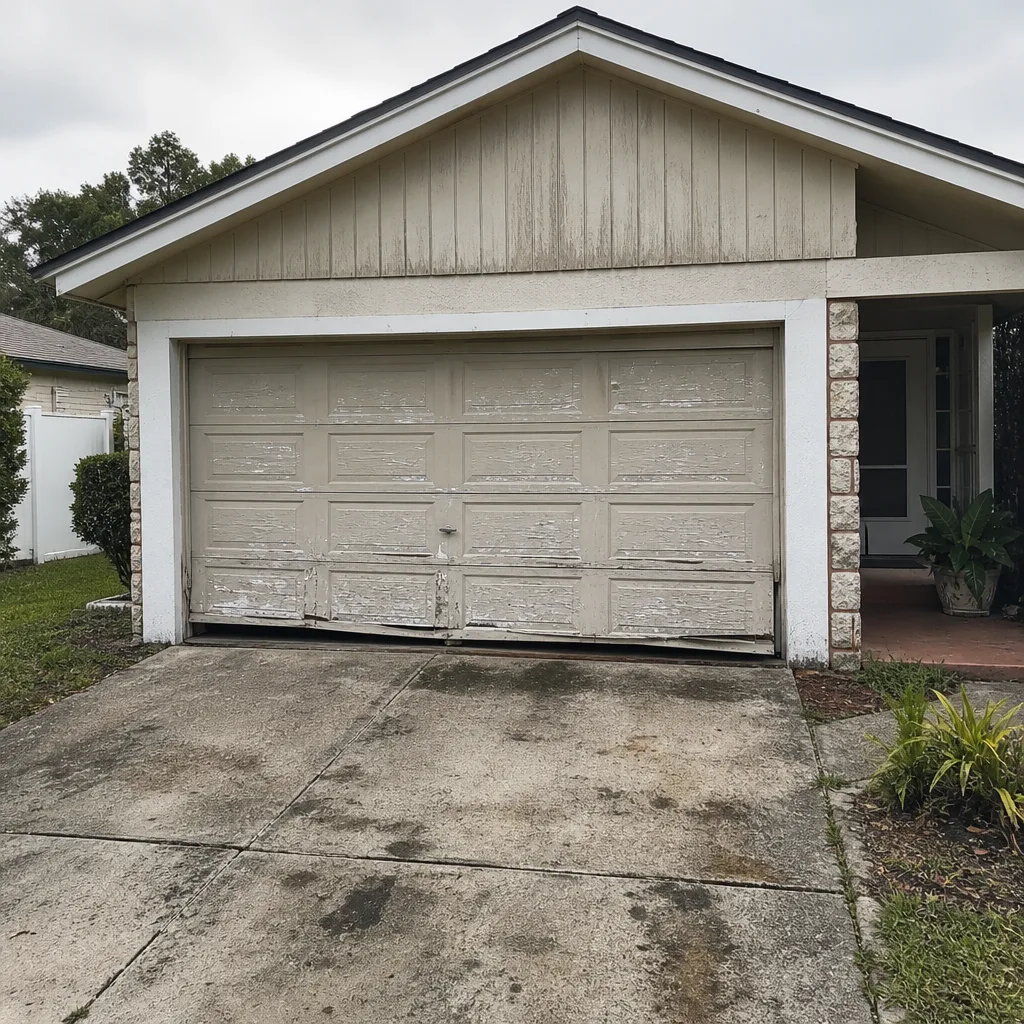 Before
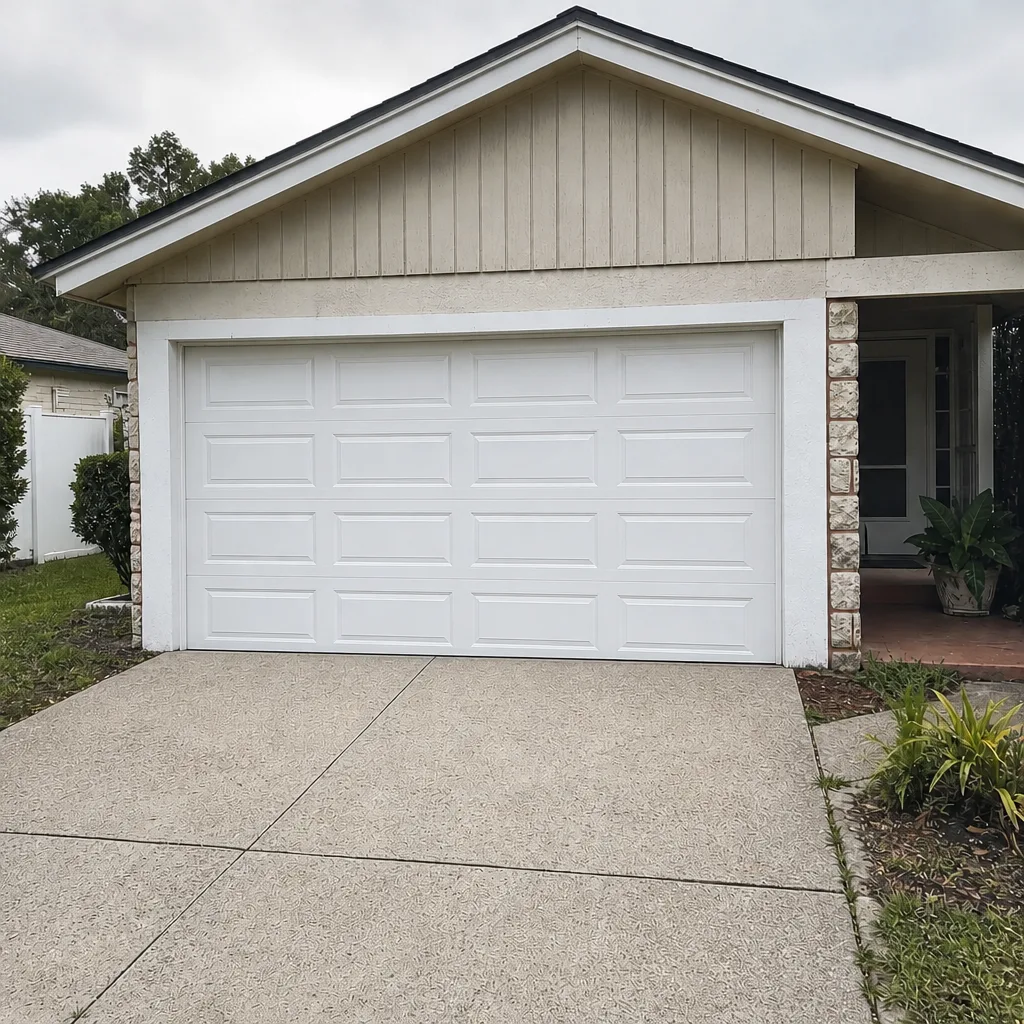 After
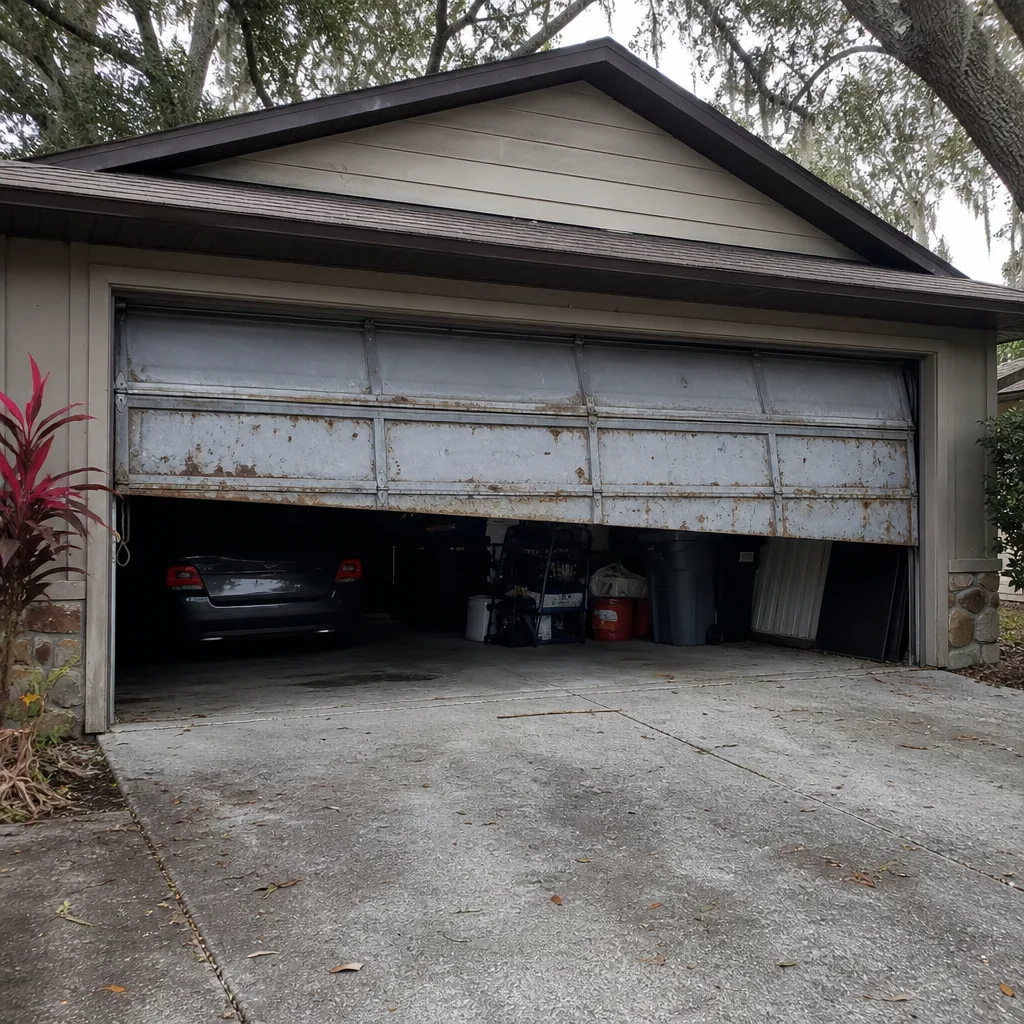 Before
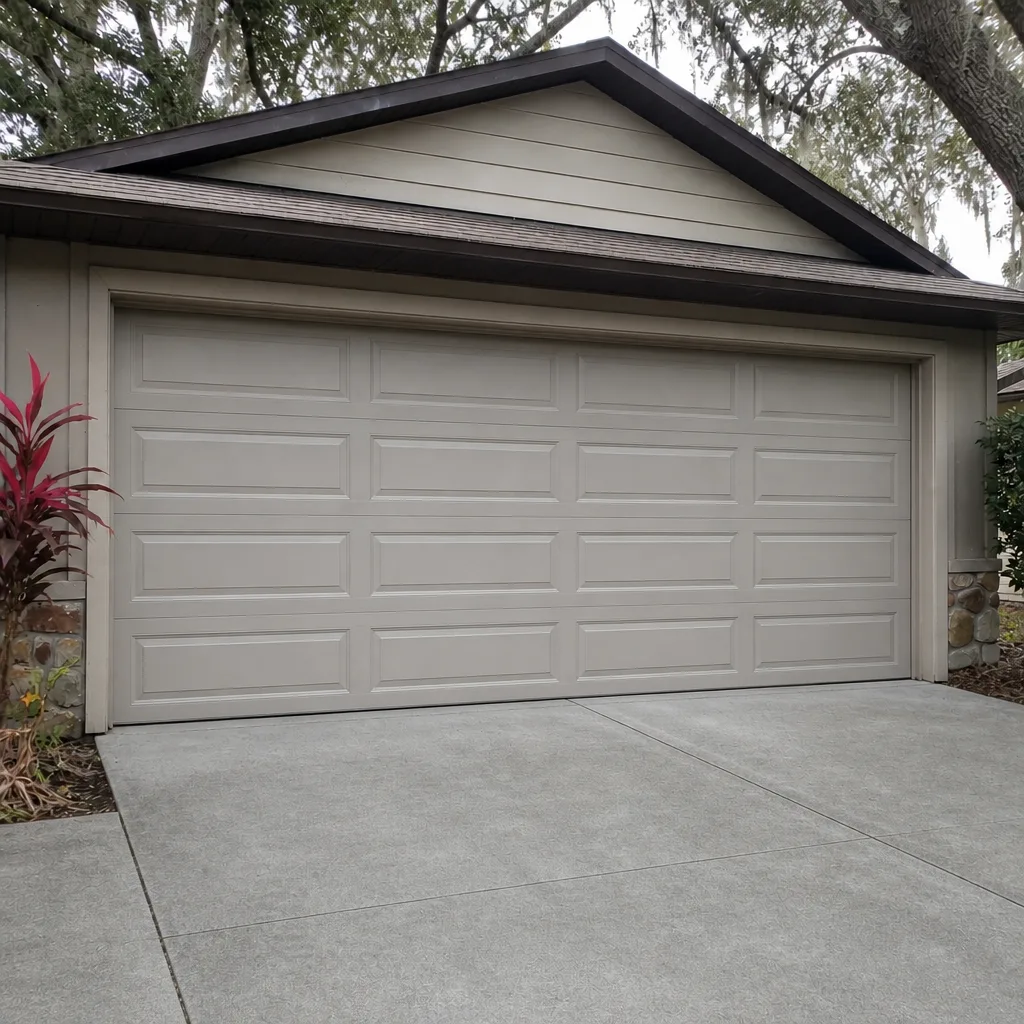 After
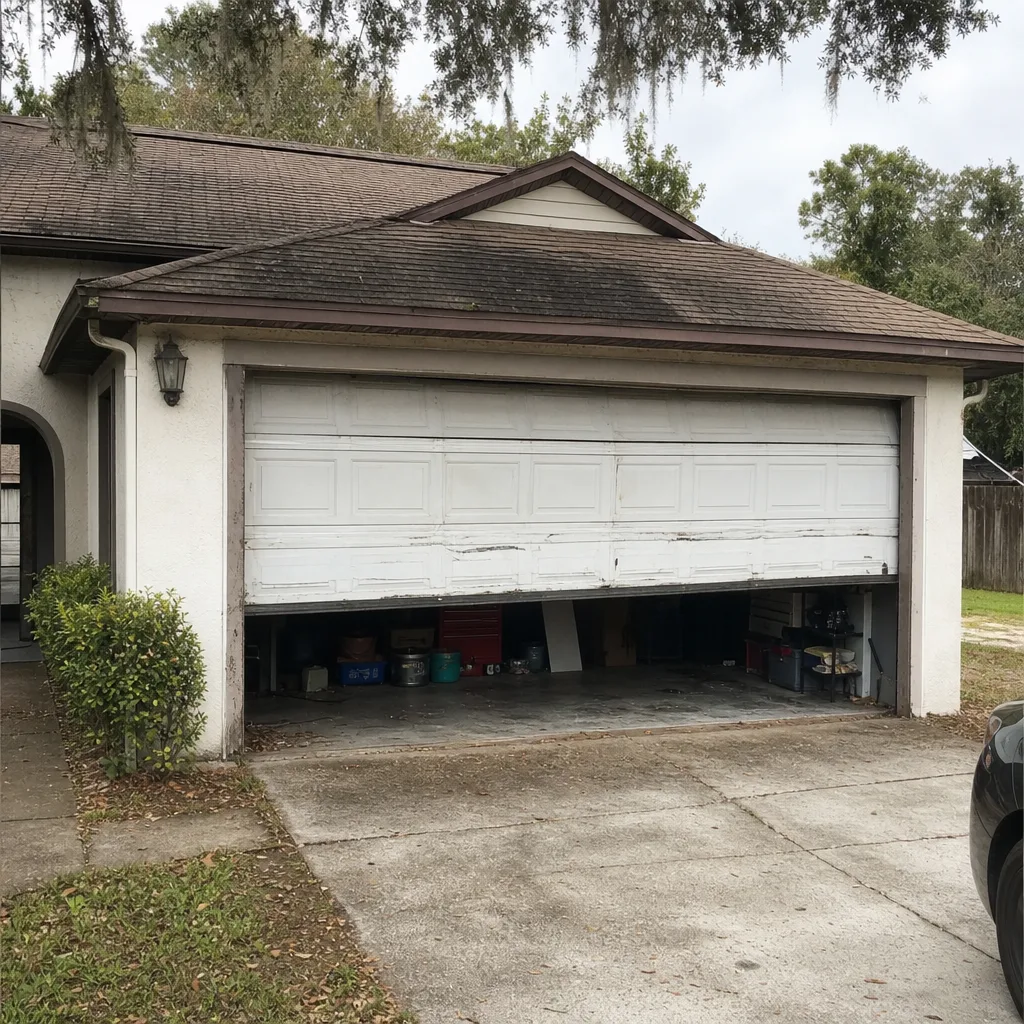 Before
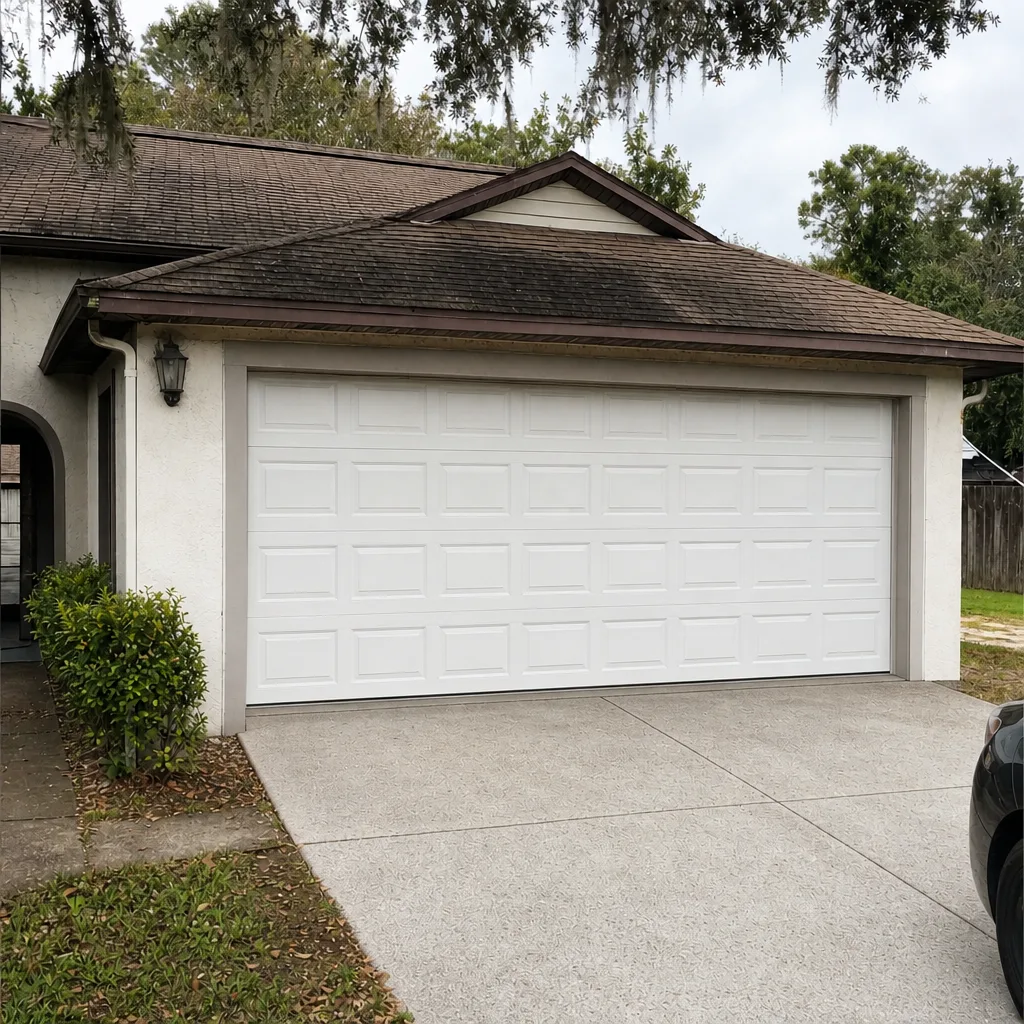 After
When to Call a Professional
Some of this work is yours. Alignment checks, lubrication, seal inspection, and the monthly safety test are all things a homeowner can do. But a handful of garage door problems deserve a trained technician every time, no matter how handy you are. If the door is out of balance or springs feel uneven, if the cables show fraying or rust, if the door has come off the track, if a panel has shifted and won’t realign, or if the opener reverses erratically, stop checking and call. A snapped spring, a door that won’t close, or anything stuck in the track are all reasons to get a professional on-site. The spring alone is a loaded system that can release thousands of pounds of force without warning. We connect you with independent local professionals who are licensed and insured as Florida requires, and our technicians carry up to 14 years of experience. Apopka Garage Door Repair Co offers free estimates in Apopka. Call (844) 443-4734. We answer 24/7. Fast dispatch from 7am to 7pm, Sunday through Friday.
Frequently Asked Questions
Every three months is the right rhythm here, not the twice-a-year schedule you’ll see in most manufacturer booklets. Apopka’s daily heat cycling thins lubricant and pulls it away from hinges, rollers, and bearing plates faster than a cooler climate does. If your door faces the afternoon sun, plan on every two months. Call (844) 443-4734 for an exact quote on a technician lubrication and adjustment visit; estimates are free.
Rust pitting, not metal fatigue alone, is what ends most Apopka springs early. Humidity settles on the coil, corrosion starts on the inside where there’s no airflow, and material is eaten away from the load-bearing surface. Heat cycling then adds stress on top of that. The outward sign is often flaking paint or rust on the outer edge. If you see it, call (844) 443-4734 for a spring repair evaluation.
No. A torsion spring stores enough force to break bones, and it releases that force without warning. Spring repair is the one garage door job that should always go to a trained technician with the right tools. Our spring work is a dedicated service, and the technicians are trained to work safely on the springs your door has now. Call for a free estimate: (844) 443-4734.
Check the bottom seal and side weatherstripping for gaps, stiffness, sagging, or water lines on the floor. A seal that’s let water in shows up as bubbling paint or a soft spot on the bottom panel. If the seal is stiff or you find daylight under the door, it needs replacing. Call (844) 443-4734 and we’ll take a look.
No. We quote the job and agree on the price before any work starts, so the written estimate is the price. That applies to maintenance, repairs, and spring replacement alike. If something unexpected turns up during the visit, we’ll explain it and get your agreement before touching it. Call (844) 443-4734 for a free estimate.
Grinding is usually a worn roller, a dry hinge, or a track bracket that has loosened in the heat. A quarterly lubrication pass often fixes it, but if the noise comes back after lubrication, or it’s accompanied by a panel shift, it’s worth a technician’s look. Get an off-track evaluation before a panel comes off the rails: call (844) 443-4734.
The Bottom Line
A garage door checklist for Apopka has to be built around heat, humidity, and summer rain, not snow and ice. The monthly safety and balance tests catch set-up problems early. Quarterly lubrication every three months (not twice a year) protects hinges and rollers from heat cycling. The inside-the-coil spring inspection is the check most guides skip, and it’s the one that prevents a snapped spring. The bottom seal and weatherstripping need a look after every rainy season. And the panel alignment check is the simplest way to avoid the most disruptive of all garage door calls. Do the small checks consistently and the big problems have less room to start.
When something on your door needs a trained eye, or you’d rather have a specialist work through the whole checklist for you, call Apopka Garage Door Repair Co at (844) 443-4734. Our technicians have up to 14 years of experience and are trained across LiftMaster, Chamberlain, Genie, Clopay, Amarr, Wayne Dalton, Craftsman, and Raynor, so we work on the door and opener you already have. We handle springs, openers, panels, and full garage door installation, and emergency service is a core part of what we do, not an add-on. We answer 24/7. Fast dispatch from 7am to 7pm, Sunday through Friday, closed Saturday. Estimates are free, and the price is quoted and agreed before any work begins. If you’re weighing repair against replacement, our team at Apopka Garage Door Repair Co will give you a straight diagnosis with no upsell. Call (844) 443-4734 today.
Written by the team at Apopka Garage Door Repair Co.